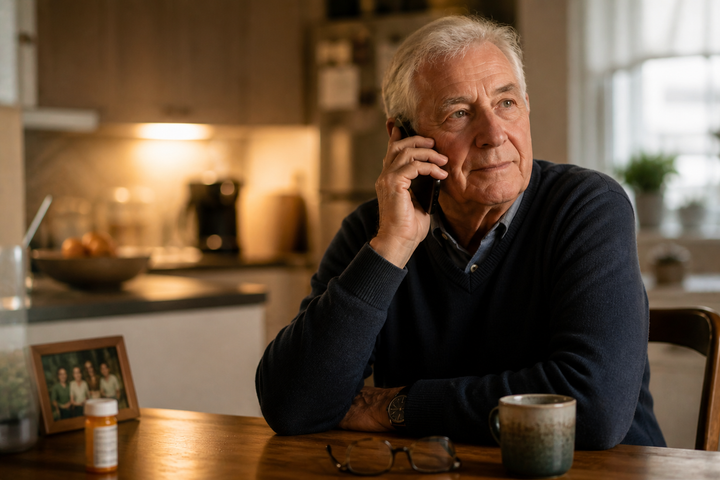
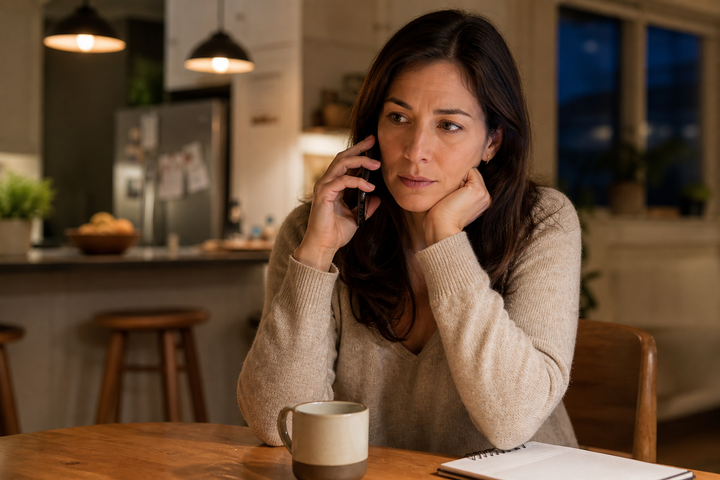
How Voice Check-Ins Can Help Seniors Feel Less Alone
Loneliness in older adults is often quiet. A short daily voice check-in can create routine, connection, and reassurance for both seniors and their families.

Loneliness does not always look dramatic.
Sometimes it looks like an untouched phone.
A quiet kitchen.
The television playing only for background noise.
A parent saying, “I’m fine,” because they do not want to bother anyone.
For many older adults, the hardest part of the day is not a medical appointment or a physical limitation. It is the long stretch of silence between one meaningful conversation and the next.
Families often care deeply, but modern life makes consistency difficult. Adult children may live in another city, another country, or simply be pulled between work, children, bills, and their own exhaustion. The love is there. The daily contact is harder.
That is where voice check-ins can help.
Not as a replacement for family. Not as a replacement for doctors, friends, or community.
But as a simple daily touchpoint that says: someone is here, someone is listening, and your day matters.
Loneliness in older adults is often quiet
The World Health Organization says social isolation and loneliness are important but often neglected health concerns. Around 1 in 10 older people experience loneliness, and about 1 in 4 are socially isolated globally.
The CDC also notes that loneliness and social isolation can increase the risk of serious mental and physical health problems.
But inside a family, loneliness may not announce itself clearly.
An aging parent may not say:
“I am lonely.”
“I feel forgotten.”
“I need more connection.”
They may say:
“Nothing much happened today.”
“I was just watching TV.”
“You’re busy, don’t worry.”
“I didn’t want to disturb you.”
This is one reason loneliness can be so hard for families to notice. Older adults may hide it out of pride, love, fear, or habit.
Why voice matters more than another notification
For many seniors, voice feels natural.
They may not want to type into an app. They may not enjoy forms, dashboards, or complicated screens. But conversation is familiar. It is human. It feels closer to how care has always happened.
A voice check-in can ask simple, gentle questions:
- How are you feeling today?
- Did you sleep well?
- Did you eat properly?
- Did you go outside?
- Is anything worrying you?
- Do you have any appointments coming up?
- What made you smile today?
These questions are small, but they create something powerful: rhythm.
And rhythm matters.
A daily check-in gives the day a point of connection. It helps someone reflect. It gives them a reason to speak out loud, share a detail, remember a plan, or simply feel heard.
Small conversations can create emotional safety
One reason many older adults avoid sharing worries with family is that every serious call can feel heavy.
They may think:
“My son is already stressed.”
“My daughter has children.”
“I don’t want them to worry.”
“If I say I’m not feeling well, they will panic.”
A gentle voice check-in can lower that emotional pressure.
Instead of waiting for a crisis, the conversation becomes ordinary. The senior does not need to make a big announcement. They can simply answer one question at a time.
That makes it easier to share small truths:
“I felt a little dizzy this morning.”
“I didn’t sleep well.”
“I forgot my evening medicine yesterday.”
“I haven’t gone out this week.”
“I felt sad today.”
These are not always emergencies. But they are meaningful signals.
Voice check-ins help families notice patterns
One conversation may not tell you much.
Everyone has an off day. Everyone forgets something sometimes. Everyone feels quiet once in a while.
But repeated patterns matter.
A voice check-in can help families notice things like:
- A parent sounding more tired than usual
- Repeatedly skipping meals
- Mentioning poor sleep several days in a row
- Forgetting appointments more often
- Becoming less interested in hobbies
- Saying they have not spoken to anyone all day
- Sounding unusually low, anxious, or withdrawn
The goal is not to monitor every word. The goal is to notice changes early enough to respond with care.
Sometimes the right response is a family call. Sometimes it is arranging a visit. Sometimes it is checking medication, booking a doctor appointment, or helping them reconnect with friends or community.
Voice can support independence, not take it away
Many families worry about crossing a line.
They want to help, but they do not want their parent to feel watched. They want reassurance, but they do not want to turn love into surveillance.
That concern is valid.
Good care should protect dignity. Older adults should feel respected, not managed.
Voice check-ins work best when they are framed as support, not control.
Instead of saying:
“We need to track you every day.”
Try:
“We want you to have someone to talk to every day, and we want to stay updated without constantly disturbing you.”
That small difference matters.
The goal is not to take independence away. The goal is to help independence last longer by making support easier and more consistent.
A daily voice routine can reduce caregiver guilt too
Loneliness does not only affect the older adult. It affects the caregiver.
Many adult children carry a quiet guilt:
“I should call more.”
“I hope they’re okay.”
“What if something changes and I miss it?”
“They say they’re fine, but are they really?”
This guilt can become part of daily life, especially for long-distance caregivers.
A voice check-in does not remove the responsibility of care. But it can make care feel less chaotic.
Instead of relying only on memory, scattered calls, or emergency updates, the family gets a more regular sense of how their loved one is doing.
That consistency can bring peace of mind.
How famly.care uses voice check-ins
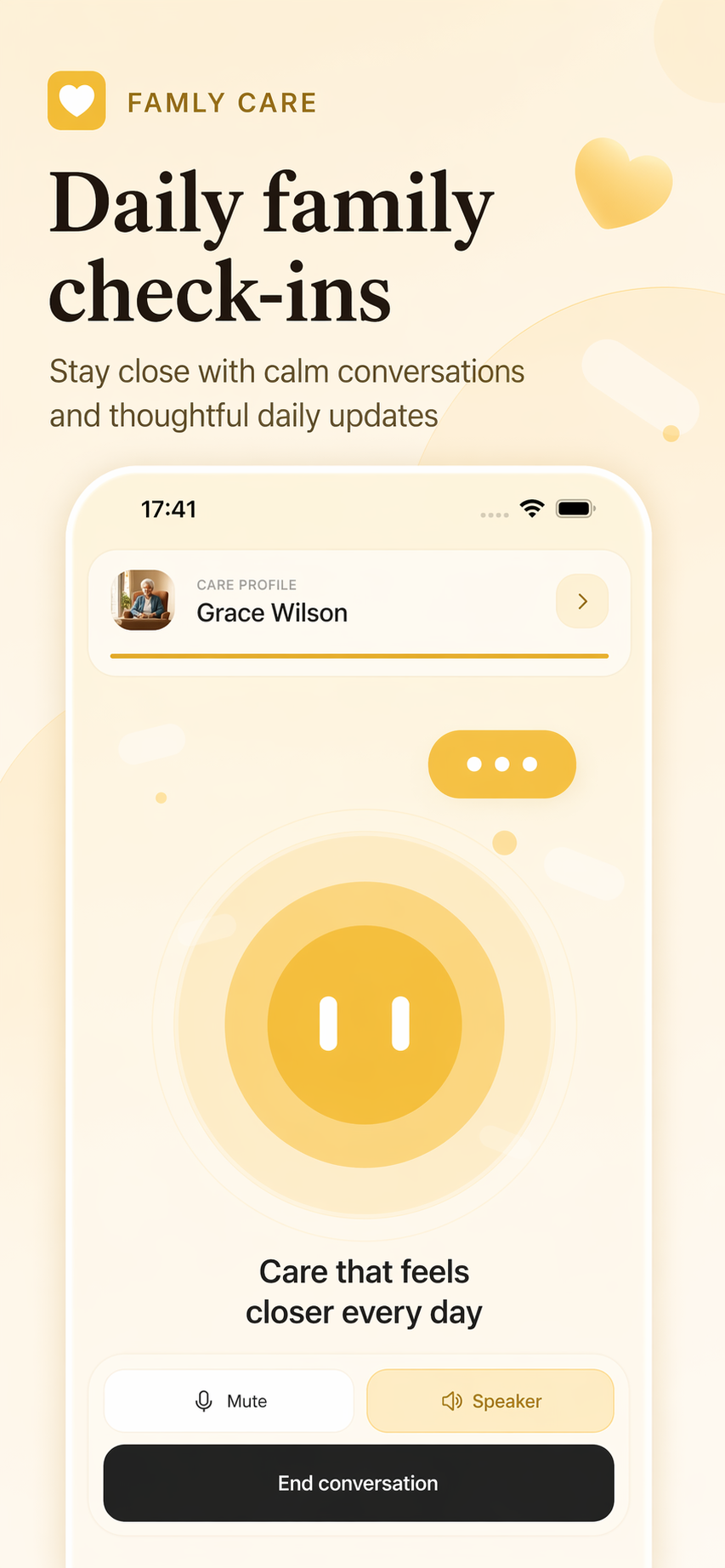
famly.care is built for families who want to stay close to aging loved ones without making care feel cold or clinical.
A warm voice agent talks with the family member, asks gentle daily questions, and helps create wellbeing updates for caregivers. It can support routines around mood, sleep, appointments, general wellbeing, and small changes that may be worth noticing.
It does not diagnose. It does not replace family, doctors, or emergency services.
It simply helps families stay more connected through regular voice-based conversations.
What families can do today
You do not need a perfect system to start helping someone feel less alone.
Start small.
Ask one specific question each day.
Call at a predictable time when possible.
Ask about meals, sleep, mood, and plans.
Listen for what changes, not just what is said.
Encourage social routines: neighbors, friends, faith groups, walking groups, hobbies.
If loneliness feels persistent or connected to depression, anxiety, or health changes, speak with a healthcare professional.
Most importantly, do not make connection feel like a test.
Make it feel like care.
Final thought
For many older adults, loneliness is not the absence of people.
It is the absence of being expected, remembered, and gently heard.
A short voice check-in cannot solve everything. But it can create a daily moment of connection. It can help a person feel less invisible. It can help families notice when something is changing.
Sometimes care begins with one simple question:
“How are you feeling today?”
And sometimes, being asked every day makes all the difference.
Sources
- World Health Organization: Social Isolation and Loneliness
https://www.who.int/health-topics/ageing/reducing-social-isolation-and-loneliness-among-older-people - CDC: Health Effects of Social Isolation and Loneliness
https://www.cdc.gov/social-connectedness/risk-factors/index.html - World Health Organization: Mental Health of Older Adults
https://www.who.int/news-room/fact-sheets/detail/mental-health-of-older-adults